

Cloud hosting growth 2025 is driven by the need for faster website speeds, better security against cyber threats, and the integration of AI for server management. For bloggers, this means higher uptime and the ability to handle traffic spikes instantly without crashing, making it superior to traditional shared hosting.
Is your blog feeling a little slower than usual lately? Or maybe you are worried that your site might crash the moment a post goes viral? You are not alone.
In the fast-paced world of the internet, speed and reliability are everything. If your site takes too long to load, readers leave. It is that simple. This is exactly why we are seeing a massive shift in technology this year. The cloud hosting growth 2025 trends show that more content creators are moving away from old-school servers and embracing the cloud.
If you are a blogger wondering if you should make the switch, you are in the right place. This guide explains why cloud technology is taking over and how it can help you grow your audience.
The Big Shift: Understanding Cloud Hosting
To understand why everyone is talking about the cloud, we first need to know what it is.
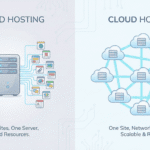
In the past, web hosting was like renting a single room in a crowded house (shared hosting). If your roommate had a loud party (lots of traffic), you couldn’t sleep.
Cloud hosting is different. Instead of relying on one single physical server, your website data is spread across a network of connected servers. If one server has a problem, another one instantly takes over.
Why Is It Trending Now?
The technology isn’t new, but the adoption rate is skyrocketing in 2025. Why? Because the tools have become easier to use and much more affordable for everyday bloggers. You no longer need a degree in computer science to run a cloud server.
Snippet: Cloud hosting uses a network of virtual servers to host your site. This ensures that if one server fails, your site stays online, offering 99.9% uptime reliability.
Reason 1: Speed is the New Currency
In 2025, nobody has patience. Studies show that if a site takes more than 3 seconds to load, over half of your visitors will leave.
Google also cares deeply about speed. They use “Core Web Vitals” to decide which blogs rank on the first page. Cloud hosting growth 2025 is largely fueled by this need for speed. Cloud servers can process data faster because they use advanced caching and resources that are dedicated just to you.
Reason 2: Handling Traffic Spikes
Imagine you write a blog post that gets shared by a famous influencer. Suddenly, 5,000 people try to visit your site at once.
On Shared Hosting: Your site likely crashes. You lose readers and ad revenue.
On Cloud Hosting: The system notices the spike and automatically allocates more resources (RAM and CPU) to handle the crowd.
This ability to “scale” instantly is a game-changer for bloggers who want to grow.
Reason 3: 100% Uptime Reliability
Downtime is the enemy. Every minute your blog is offline is a minute you aren’t making money or connecting with readers.
Because cloud hosting utilizes a cluster of servers, there is no single point of failure. If hardware breaks in a traditional data center, your site goes dark. In the cloud, your site just “floats” to a healthy server automatically.
Reason 4: Enhanced Security Features
Cyber threats are getting smarter. Hackers love to target WordPress blogs.
One major factor in cloud hosting growth 2025 is security. Modern cloud providers use Artificial Intelligence (AI) to spot suspicious behavior before it even touches your website. They act like a digital bodyguard, filtering out bad traffic and bots.
Data Isolation
On shared hosting, if a neighbor gets a virus, it can sometimes spread to your site. On the cloud, your account is isolated. What happens to others does not affect you.
Reason 5: Cost Efficiency for Beginners
A common myth is that cloud hosting is too expensive. Years ago, that was true.
Today, the pricing models have changed. Many providers offer a “pay-as-you-go” model. This means you only pay for the resources you actually use. If you have a small blog, your bill is small. As you grow, your investment grows with you. This flexibility is a huge reason for the surge in adoption this year.
Cloud Hosting vs. Shared Hosting: The Breakdown
To make this clear, let’s look at the differences side-by-side.
| Feature | Shared Hosting | Cloud Hosting |
| Speed | Often slow during peak times | Consistently fast |
| Reliability | Single server (risk of failure) | Network of servers (redundant) |
| Scalability | Hard to upgrade instantly | Instant scaling |
| Security | Vulnerable to “neighbors” | Isolated environment |
| Price | Fixed monthly fee (Cheap) | Pay-as-you-go or Fixed (Moderate) |

The Role of AI in Hosting
You cannot talk about 2025 without talking about AI.
AI is revolutionizing how servers are managed. In the past, a human had to manually update server software or fix bugs. Now, AI systems monitor cloud servers 24/7. They can predict issues before they happen and fix them automatically. This “self-healing” technology is a major driver of cloud hosting growth 2025.
Sustainability: Green Hosting Trends
Bloggers in 2025 are more eco-conscious than ever. Did you know the internet consumes a massive amount of electricity?
Cloud hosting is generally more energy-efficient than traditional data centers. By optimizing resources and not having idle servers running at full power, cloud providers are reducing their carbon footprint. If you care about the planet, moving to the cloud is a greener choice.
Edge Computing and Global Reach
This sounds technical, but it is simple.
“Edge computing” means processing data closer to where the user is. If your reader is in London, the cloud server in London delivers the website, not the one in New York. This drastically reduces the delay (latency).
For travel bloggers or news sites with a global audience, this is essential.
Managed vs. Unmanaged Cloud Hosting
If you are ready to switch, you have two choices.
Unmanaged Cloud
This is for tech experts. You get a blank server, and you have to install the operating system, security, and WordPress yourself. It is cheaper, but hard work.
Managed Cloud
This is the best choice for most bloggers. The hosting company handles the technical stuff (updates, security, backups). You just focus on writing content. The growth we are seeing in 2025 is mostly in the managed cloud sector.
How to Choose the Right Provider
With so many options, how do you pick?
Check Support: Do they offer 24/7 chat?
Look for Backups: Automatic daily backups are a must.
Speed Tech: Do they use NVMe SSD storage? (This is the fastest storage available).
Migration Policy: Will they move your site for free?
Migration: Is It Hard to Switch?
Many bloggers stay on slow hosting because they are afraid of breaking their site during a move.
The good news is that migration has never been easier. Most reputable cloud hosts offer free “white glove” migration services. You give them your login details, and they move your files and database without any downtime.
Common Myths About Cloud Hosting
Let’s bust a few myths that might be holding you back.
Myth: “It’s too technical.”
Fact: Managed cloud hosting looks exactly like standard hosting on the inside.
Myth: “It’s unsafe.”
Fact: It is generally safer due to isolation and enterprise-grade firewalls.
Myth: “I don’t need it yet.”
Fact: Google ranks faster sites higher. Switching now can help you grow faster.
Future Predictions: Beyond 2025
Where is this going?
Experts predict that by 2027, traditional shared hosting might become obsolete for professional sites. We will likely see “Serverless” WordPress setups becoming the standard, where you don’t even have to think about server size at all.
Is Cloud Hosting Right for You?
Ask yourself these three questions:
Is my site loading in under 2 seconds?
Do I plan to monetize my blog with ads or products?
Does my traffic fluctuate?
If you answered “No” to the first one, or “Yes” to the others, it is time to upgrade.
Get more ideas from this article.

Key Takeaways for Bloggers
Speed Wins: Faster sites rank better on Google.
Reliability Matters: Don’t let your site crash during your big moment.
Future Proof: Cloud technology grows with your blog.
Final Thoughts
The cloud hosting growth 2025 trend isn’t just hype. It is the new standard for a faster, safer, and more reliable internet. As a blogger, your website is your business asset. investing in better hosting is investing in your own success. 🚀
Don’t let a slow server hold back your potential.
FAQs
What is cloud hosting?
Cloud hosting is a type of web hosting that uses multiple different servers to balance the load and maximize uptime. Instead of using a single server, your website can tap into a “cluster” that uses resources from a centralized pool.
Why is cloud hosting better for bloggers?
It offers better speed, higher security, and the ability to handle traffic spikes without crashing. This helps with Google rankings (SEO) and user retention.
Is cloud hosting expensive?
Not anymore. In 2025, many providers offer pay-as-you-go plans or affordable managed cloud tiers that compete with traditional hosting prices.
Do I need technical skills to use cloud hosting?
If you choose “Managed Cloud Hosting,” no. The provider handles all the technical updates and security, making it just as easy as shared hosting.
How does cloud hosting improve SEO?
Google prioritizes fast-loading websites. Cloud hosting significantly reduces load times (improving Core Web Vitals) and ensures the site is always online, both of which boost rankings.